Resources

Tools

课题组开发或常用的在线工具、分析入口和可复用资源。

Identification of upstream regulatory factors of genes based on machine learning methods
2025-01-24

Identification of upstream regulatory factors of genes based on machine learning methods

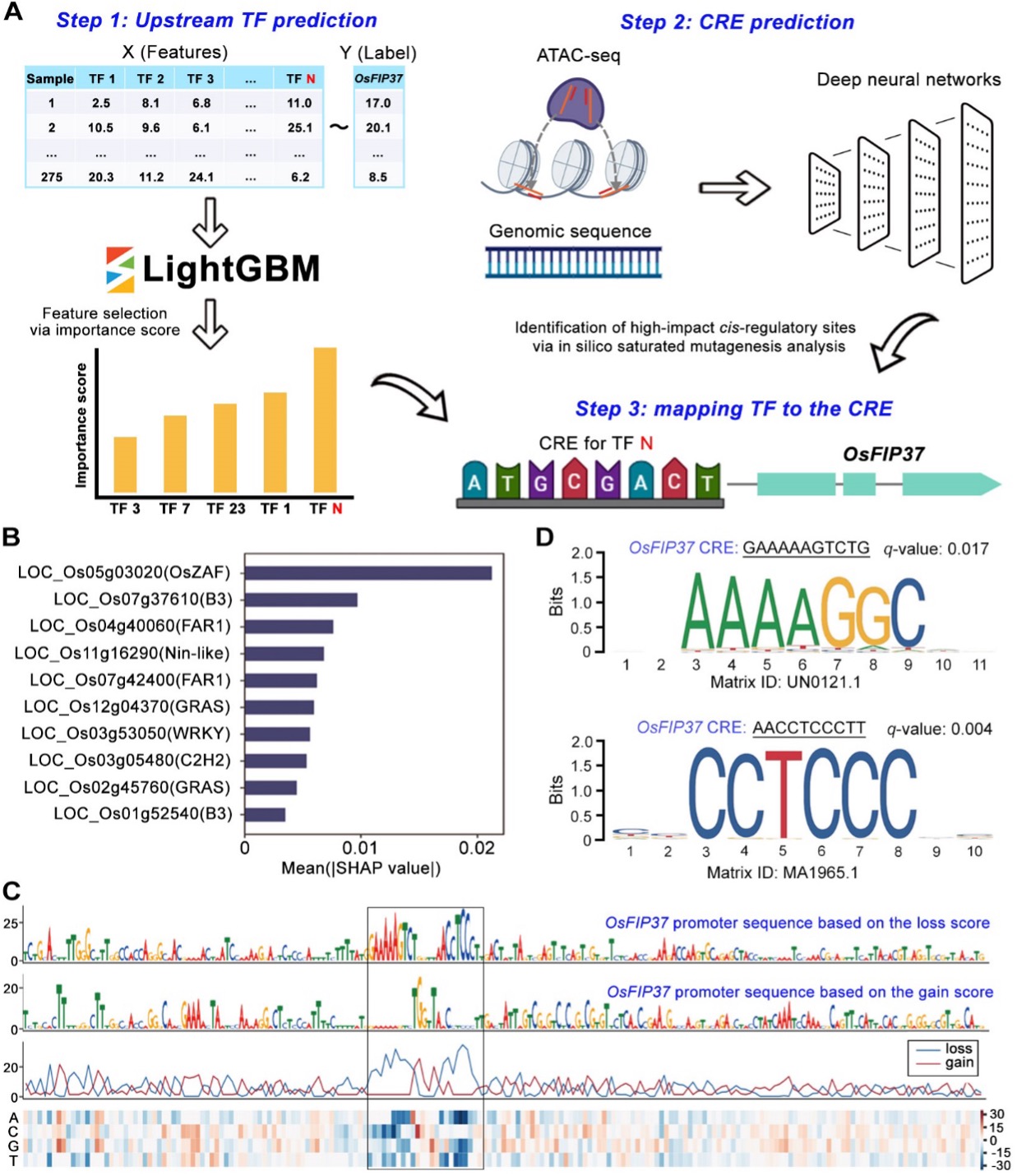
Model for predicting upstream regulatory genes and cis-regulatory elements of the gene. Step 1: a training model was built using LightGBM with a feature matrix (X) consisting of expression levels of transcription factors (TFs) to predict the expression level of the gene  (Y) in the plot. TFs were ranked based on their importance in the model, with higher importance scores indicating a higher likelihood of regulating the gene. The TF (e.g. N) with the highest importance score in the LightGBM model was selected for further investigation. Step 2: a deep learning model was constructed using the chromatin accessibility data determined by transposase-accessible chromatin with sequencing (ATAC-Seq) assay and the reference genome sequence to predict CREs within the promoter region of the gene. Step 3: a regulatory paradigm was established between an upstream TF (e.g. N) and the CRE of the gene. 

Source code: https://github.com/zhaouu/TF_gene_regulation_predict

Citation: Cheng P, Zhao H, Zhang S, et al. Feedback regulation of m6A modification creates local auxin maxima essential for rice microsporogenesis[J]. Developmental Cell, 2025.
POCKET
2025-01-23

POCKET

Prioritizing candidate genes by integrating knowledge-based gene sets, variant effects, GWAS, and TWAS data

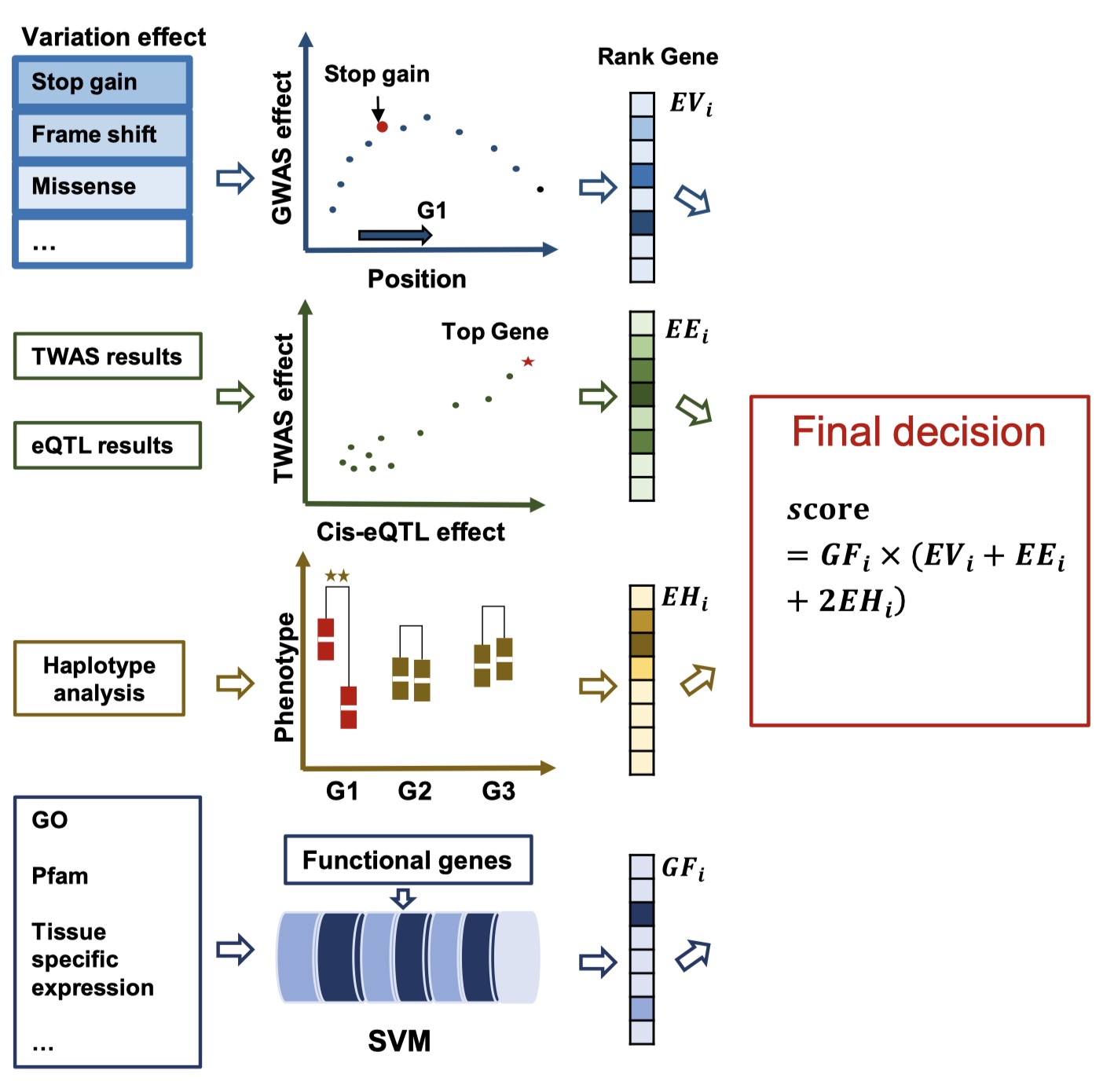
To prioritize candidate genes within GWAS QTL regions, we employed multi-omics datasets to establish a comprehensive scoring framework. First, we evaluated the effects of genetic variations within gene regions using SNP effector annotations (Cingolani et al., 2012) and the GWAS P-values of the variations, normalized through a Min-Max scaling approach. Second, the gene expression effects within candidate regions were assessed based on TWAS P-values and cis-eQTL results. Third, genes were categorized into distinct haplotypes based on variations in their gene and upstream regions, and a haplotype-based association score was calculated. Fourth, we predicted the probability of a gene being related to the phenotype by utilizing 8,283 features derived from four datasets: (i) Gene Ontology (GO) categories, (ii) InterPro protein classifications, (iii) gene expression datasets from Lu et al. (2018), and (iv) differentially expressed genes (DEGs) from known SOC-related mutants or overexpression lines. Additionally, we incorporated independent component analysis (ICA) components identified from population transcriptomes at 20 and 40 days after flowering (DAF). Using these features, we applied a support vector machine (SVM) to predict gene functions. Finally, we integrated the scores from these four steps to determine the genes most likely to influence the phenotype.

Source Code: https://github.com/zhaouu/POCKET

Python package: https://pypi.org/project/Gene-POCKET/

Citation: Tang, S., Zhao, H., Lu, S., Yu, L., Zhang, G., Zhang, Y., . . . Guo, L. Genome- and transcriptome-wide association studies provide insights into the genetic basis of natural variation of seed oil content in Brassica napus. Molecular Plant. doi:10.1016/j.molp.2020.12.003

Software

Software

可下载、可部署或可引用的软件工具。

暂无软件条目 可以在后台添加软件下载、部署说明或代码仓库入口。
Internal SOP

Protocols and SOPs

实验流程、内部规范和可复用操作文档。

暂无 SOP 条目 登录后可在共享中心维护内部实验流程和操作规范。